NORDIC TEXTILE ART - MAKING LOOPS - NORDIC/BALTIC 2026
Nordic Textile Art is making a loop – Stockholm – Tallinn – Stockholm.
Dates: 23.4 – 27.4 2026
A Nordic/Baltic textile conference with a full program that starts in Stockholm, continues on the boat over to Tallinn, where it continues to fill up for three days and ends on the boat back to Stockholm.
Annual meetings are organized circulating in the Nordic countries with thematic program content with activities to create mobility with new forums for textile art. We call it Nordic Textile Meeting because we think the meeting is the most important aspect. In 2026, it is time for Sweden to host the event. We have established good contacts with artists from Estonia and the Estonian Textile Artists' Association. This year, we therefore want to strengthen and expand our networks and make a loop to Estonia.
Our program is fantastic and we are really looking forward to experiencing these days in April together.
The registration is open 2 February - 2 March. Limited number of places. FULLY BOOKED
Här hittar du program och information på svenska.
Conference language: English and Skandinaviska.
Scrolla längst ner på sidan så hittar du alla årsmöteshandlingar.
Annual meeting documents, scroll down to the bottom of the page.
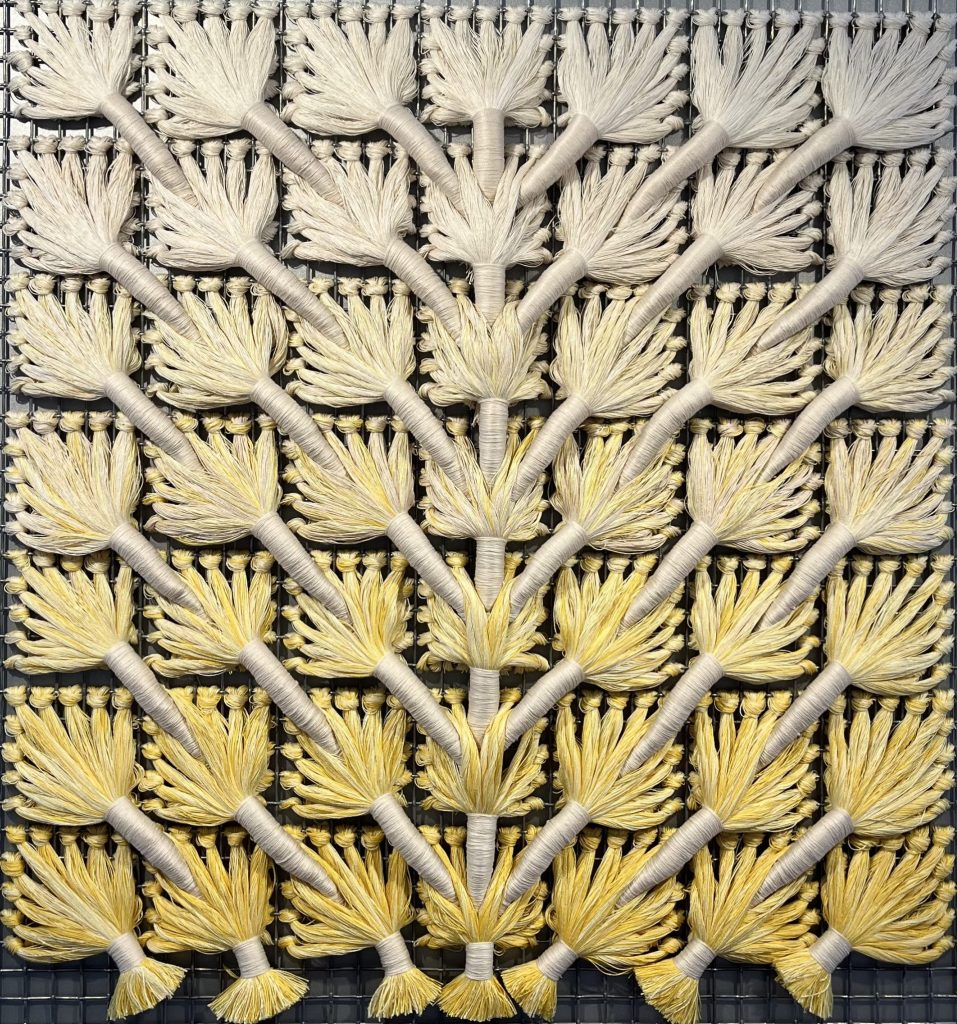 Elisabeth Brenner Remberg "Network"
Making Loops
We see the boat trip as a connection that spans several dimensions. Shipping has, at all times, brought people together, and the life at sea carries much of the textile knowledge with its nets, knots, ropes, and hawsers. Being together on a boat provides the time and opportunity to bring people together both in knowledge, creativity, intergenerational meetings, and across national borders. In today's art, especially among younger artists, we see a newly discovered interest in thread as a material that creates a modern expression in combination with older techniques such as macramé, bobbin lace, sculptural weaving, braiding, crochet, and knitting.
Three days in Tallinn will be filled with meetings with our Estonian textile colleagues, workshops, study visits, and other textile-related activities. The lecturers will interpret 'making loops' in their presentations and workshops. The goal is to explore the significance of the loop philosophically or physically.
Click the link for registration. Limited number of places. FULLY BOOKED
Program Highlights.
(updated 3.2 2026)
Thursday 23 April in Stockholm
9.30 –15.00 K.A Almgren's silk weaving mill and museum.
- Guided tour of the museum.
- Textile Talks on the theme of Making loops. A loop forward and backward in time, a loop around materials and techniques
- Elsa Chartin and Frida Hållander - "Textile heritage"
16.00 Boarding the boat to Estonia. Departure 17.30.
- Monumental lace-making, collective workshop and performance.
- Conference dinner.
- Nordic Championship in Dark Knitting.
Friday 24 April in Tallinn
10.00 Arrival in Tallinn
13.30-14.00 Meeting spot: ARS Art Factory (coffee & snacks) www.arsfactory.ee/?lang=en
14-15.30 Textile Talks on the theme of Making loops
- Aet Ollisaar (EE) - ETAA, Estonian Textile Students Making New Loops
- Kadi Pajupuu (EE) - "Making Loops: the new weaving technique Multi Weave"
- Karin Sterner (S) "Re-make. Re-loop"
- Elisabeth Brenner Remberg (S) "Network" an artist presentation
15.30-18.00 Optional Workshops or visit the Open studios at ARS Art Factory
Workshop I - Kadi Pajupuu (EE) Multi Weave Workshop
Workshop II - Zane Shumeiko, (LV, Ee) Loops in embroidery. Experimental embroidery and the basics of free-motion stitching.
Workshop III - Karin Sterner (S) Re-make, Re-knit, Re-loop.
Saturday 25 April - Textile tour to Türi
10.00 - 18.30 We go by bus from Tallinn to Türi.
We visit the Estonian Textile Artists Association's Spring Exhibition. Türi Cultural Center
Also time for conference lunch party and time for Nordic – Baltic networking - connecting people
Sunday 26 April in Tallinn
9.30 -10.30 NTA Annual Meeting. (You will find the documents you need if you scroll down)
11.00 Time for visits to galleries, craft shops, Art museums and artists' studios in Tallinn
16.30 Boarding the boat to Stockholm. Departure 18.00.
On the boat discussion time: How do we create visibility and opportunities for textile artists in the Nordic countries?
Monday 27 April
10.00 Arrival in Stockholm. The conference ends on the boat.
Click here for a full program.
For participants who arrive earlier in Stockholm or stay longer, a program will be arranged. Pre-program April 21 – 22 in Stockholm. Post program April 27 in Stockholm.
Were to stay in Stockholm and Tallinn?
In Stockholm. You do the booking yourself. Our best suggestion for accommodation in Stockholm, stay on a boat. Rygefjord hostel & Hotel. https://rygerfjord.se/ It is a 10 minutes walk from Almgrens Sidenväveri.
In Tallinn we have pre-booked rooms for you at St. Barbara hotel. Price for twin room, is 57€ per room, per night. Breakfast is included. You do the booking yourself. Use the Code NTA. http://www.stbarbara.ee/ e-mail: reservations@stbarbara.ee
More about the workshops.
Workshop I. Kadi Pajupuu: MultiWeave
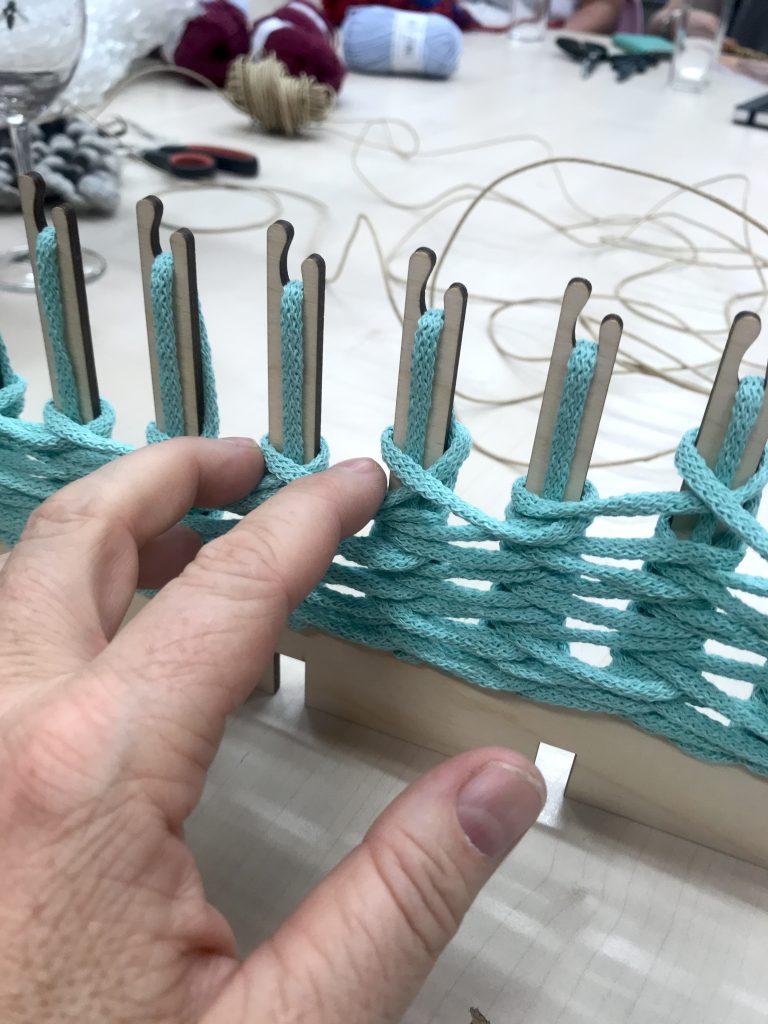
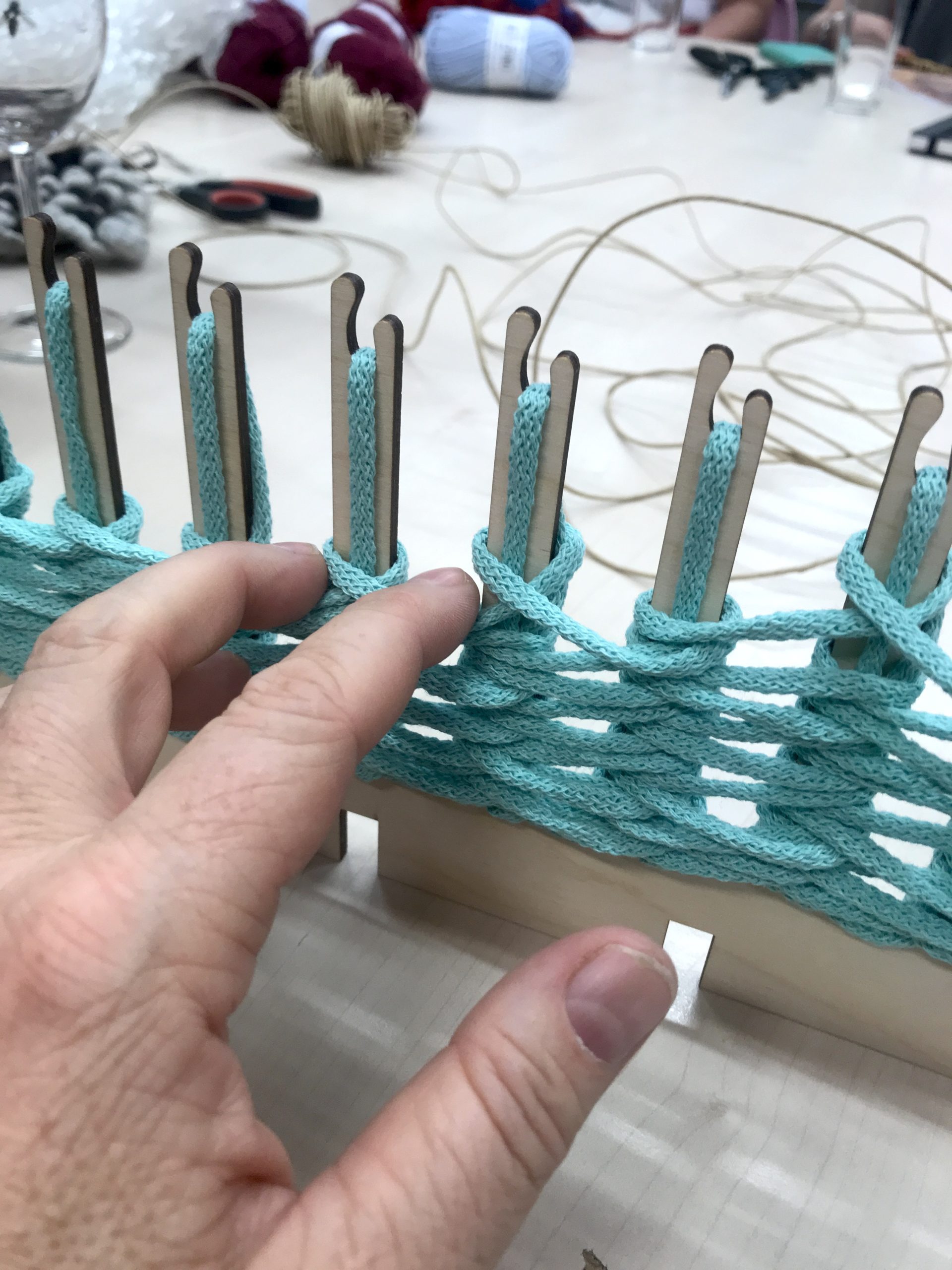
MultiWeave is type of weaving where warp supports are placed in isometric grid and weft yarn is guided around those supports. MultiWeave enables to create textile structures with ribs, pockets, corners and also complicated cell structures.
Read more about MultiWeave and MultiWeave in art projects https://kadipuu.ee/inventions/multiweave
Workshop II. Zane Shumeiko: Free-motion paper embroidery
Materials: None required, but participants may bring any small-scale found object that brings meaning to them. For the NTA meeting “Making the loops”, I offer an exciting masterclass to create a stitched paper memory card. That could represent your journey or any abstract ideas that emerge during your experience of this event.
I will guide you through experimental embroidery and the basics of free-motion stitching (using a sewing machine and/or by hand), as well mixed media art and you will create a small scale art piece to bring home with you.
Workshop III. Kari Sterner: Re-knit · Re-loop · Cut
During this workshop, we are invited to learn and develop our skills in different loops, knitting techniques, and ways of stitching together what is broken. These skills are necessary for the future of re-creating society and re-knitting garments that have been left behind.
Together, we will make an object that reminds us of the commons we create, the fibers that carry values and stories.
We meet, we share, we learn together — and then we separate. We cut things apart and divide the object into pieces. That is how we share and care; that is how our art creates new possibilities. When we take it home, it can write a new chapter, a new story — a new loop.
Download the Annual meeting Documents:
NTA agenda english, svenska, norsk.
NTA Årsberetning 2025
NTA Annual report 2025
NTA Annual plan 2026-2027
NTA Verksamhetsplan 2026-2027
NTA Budget 2026-2027
NTA Bokslut 2025 med revision.